
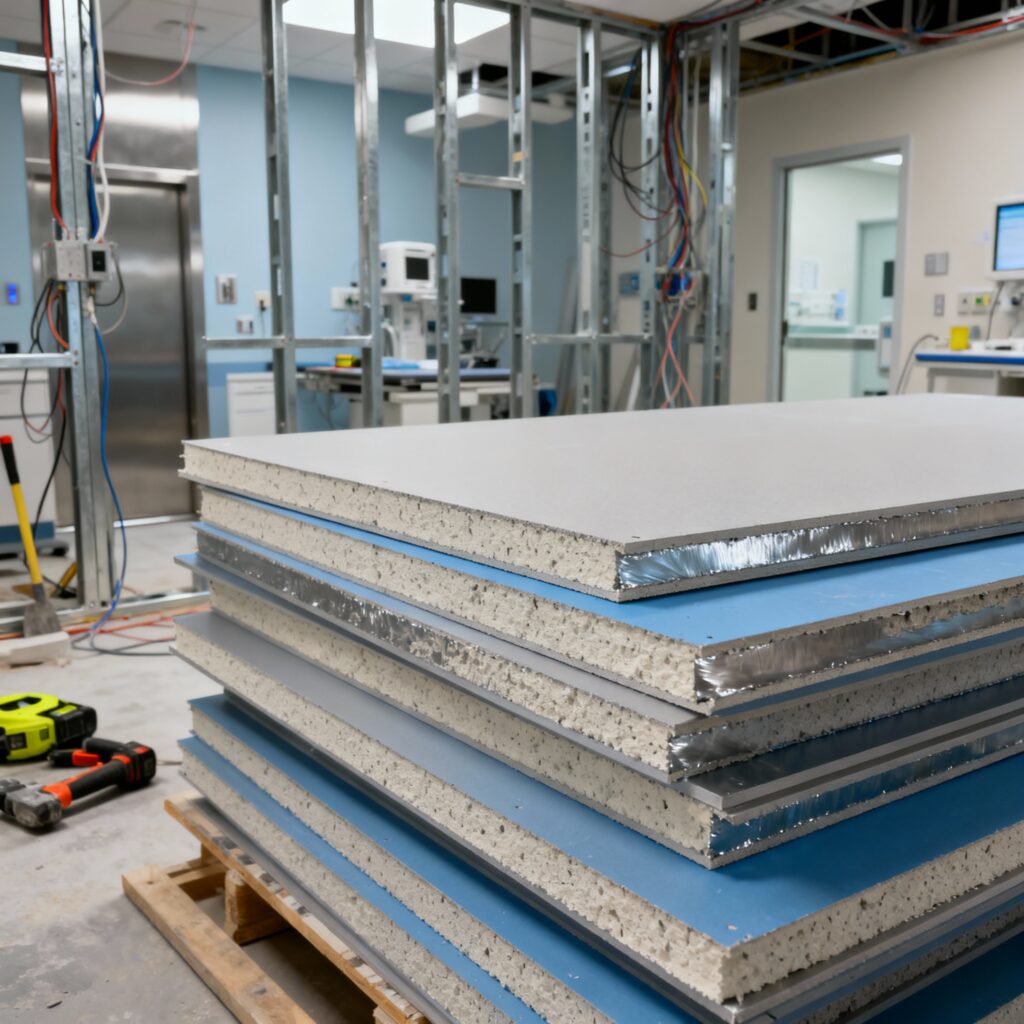
When most people think of drywall, they imagine the standard panels used in everyday construction. But in specialized projects—especially those involving radiation protection—lead lined drywall is the material of choice. This type of drywall looks similar to regular panels but has a built-in layer of lead that shields against radiation.
For homeowners considering remodeling near medical spaces, adding home offices with imaging equipment, or simply wanting to understand construction safety, here’s a clear guide to what lead lined drywall is, why it matters, and where it’s used.
What Is Lead Lined Drywall?
Lead lined drywall, sometimes called radiation shielding drywall, is a standard gypsum board laminated with a sheet of lead on one side. The thickness of the lead varies depending on the level of protection needed.
Key points to know:
- Looks like regular drywall – It can be painted, finished, and textured just like standard panels.
- Radiation protection – The lead sheet blocks harmful radiation, making it essential for spaces with X-ray machines or other imaging equipment.
- Customizable – Available in different thicknesses to meet specific shielding requirements.
Why Safety Matters
Radiation exposure, even in small amounts, can be harmful over time. While medical professionals follow strict safety guidelines, the building materials themselves provide an extra layer of protection. Lead lined drywall helps ensure:
- Reduced radiation exposure for occupants and neighbors.
- Compliance with building codes for medical and imaging spaces.
- Peace of mind for homeowners adding specialized equipment in residential settings.
Common Applications of Lead Lined Drywall
Although not required in most homes, there are situations where lead lined drywall is valuable:
- Home Medical Offices
- With more professionals working from home, some doctors install imaging equipment like X-ray machines. Lead lined drywall ensures safe use.
- With more professionals working from home, some doctors install imaging equipment like X-ray machines. Lead lined drywall ensures safe use.
- Dental or Veterinary Clinics
- If homeowners operate clinics on their property, these spaces must comply with radiation shielding standards.
- If homeowners operate clinics on their property, these spaces must comply with radiation shielding standards.
- Basement or Garage Conversions
- When medical or research equipment is installed at home, lead drywall protects adjoining rooms and upper floors.
- When medical or research equipment is installed at home, lead drywall protects adjoining rooms and upper floors.
- Specialized Home Gyms or Hobby Rooms
- Some advanced fitness and hobby equipment uses small radiation-emitting devices. Shielding provides extra safety.
- Some advanced fitness and hobby equipment uses small radiation-emitting devices. Shielding provides extra safety.
While it’s more common in hospitals, labs, and commercial offices, lead lined drywall can be part of high-end residential projects.
Benefits for Homeowners
Even though not every house needs lead lined drywall, there are several benefits when it’s required:
- Safety First – Protects family members and visitors from harmful exposure.
- Durability – Lead-lined panels are strong and long-lasting.
- Value Addition – Homes with specialized safe spaces may appeal to professionals who need medical or imaging rooms.
- Code Compliance – Ensures any medical or diagnostic equipment installed at home meets regulatory requirements.
Installation Considerations
Installing lead lined drywall requires expertise. It’s heavier than standard drywall, and improper handling could reduce its effectiveness. Homeowners should keep in mind:
- Hire qualified contractors – Not all drywall installers are experienced with lead lined panels.
- Proper sealing – Joints, screws, and penetrations must also be shielded to prevent leaks.
- Special handling – Lead sheets add weight, requiring extra support during installation.
- Regulation compliance – Work must follow local building and health codes.
Attempting DIY installation is not recommended, since professional precision is essential to safety.
Cost and Value
Lead lined drywall costs more than regular drywall due to the lead sheet and specialized installation. However, the value it provides is significant:
- Protects health and safety.
- Ensures compliance with legal and medical standards.
- Reduces liability risks if radiation equipment is used at home.
For homeowners in healthcare or research professions, this investment is both practical and essential.
Conclusion
Lead lined drywall may look like ordinary gypsum board, but its hidden layer of protection makes it a vital material in spaces where radiation safety matters. For homeowners with medical offices, imaging equipment, or specialized workspaces, this material provides unmatched safety, compliance, and long-term value.
While not every home needs it, knowing when and why to use lead lined drywall can make all the difference in creating a safe, future-ready living environment.